
Where should a porta potty go on a job site or in a yard?
Pick flat, stable ground first. ADA Standards section 302.1 calls for surfaces that are stable, firm and slip resistant, and that rule is worth following even on a unit that isn't the accessible model, because a unit that rocks on soft dirt is a unit that tips. Keep it within a reasonable walk of the work area, but not so close that dust or debris lands on the door. If you're setting up for a construction crew, check OSHA portable toilet requirements before you finalize the count and layout, since spacing interacts with how many units you need under OSHA 1926.51(c). For events, sightlines matter too. Nobody wants a line of blue boxes framing the wedding photos, so tuck them behind a tent line or use a fence panel from temporary fence rental to screen the area. If you're renting an ADA accessible porta potty, the unit needs a 60 inch turning circle inside per ADA Standards section 304.3.1, which means the ground pad has to be bigger than people expect. Our porta potty rental in Shreveport crews walk the site before drop-off specifically to catch these spacing problems early.
What are the porta potty placement rules for access and service trucks?
The truck needs a straight shot, and that's the rule people forget. A service vehicle needs clearance to back in and pump without threading between parked cars or under low branches. It's the same logic behind roll-off dumpster rental placement, where a delivery truck needs about 60 feet of straight clearance behind the drop point. Porta potties don't need that much room, but the truck still has to reach the tank valve, which sits low on the back of the unit. Keep a 3 foot minimum path clear on the service side at all times, and don't let a dumpster placement permit box in the toilet once it's set. If you're placing units at the edge of a right of way in Shreveport, that placement needs confirming with the city; we're not going to guess at a code we haven't verified. Ask about it when you request a quote, and we'll flag it before delivery day instead of after.
Do porta potty placement rules change for ADA accessible units?
Yes, and the differences aren't small. An accessible unit needs a 32 inch clear door opening under ADA Standards section 404.2.3, a 36 inch clear approach path under ADA Standards section 403.5.1, and operable hardware that works with one hand and needs no more than 5 pounds of force per ADA Standards section 309.4. Where you're clustering several units together, at least 5 percent of them need to be accessible, and never fewer than one, per ADA Standards section 213.2. That means a bank of ten standard units at a Shreveport festival needs at least one ADA unit mixed in, placed on the same firm, level pad. Check the full breakdown on ADA restroom requirements before you plan a large event layout. If you're staging a wedding, a fair, or a race through town, our event restroom rental and marathon and race restrooms pages cover the count math specific to foot traffic instead of worker headcount.
How far from a septic tank or hookup should a porta potty sit?
Far enough that service trucks and pumping trucks never cross paths. If you're running a temporary unit near a home with its own septic system, a Placerville-style septic pumping service crew and our porta potty truck both need independent access, since a residential septic tank in Shreveport is typically pumped every 3 to 5 years and that truck needs its own clear path too. Don't stage a toilet on top of a drain field or leach line. If you're not sure where yours runs, our septic pumping service team can mark it before you set anything down. For construction sites running a mobile office trailer with replacement doors that don't seal well, keep the toilet upwind and at least a few feet clear of the trailer steps so foot traffic doesn't bottleneck. That same logic applies to mobile office trailer rental staging, where the office, the toilet, and the dumpster all need their own approach lanes.
How many porta potties do I need for my site?
It depends on headcount and duration. OSHA 1926.51(c) sets 1 toilet per 20 workers on a standard construction crew, scaling up as headcount grows. Longer jobs or larger crews should check how many porta potties do I need for the full breakdown by worker count and week length.
Can I place a porta potty on a public street or right of way?
Not without confirming it with the city first. Shreveport placement rules for the public right of way were not verified for this page, so ask your permit office directly, or review porta potty permit requirements before you commit to a curbside spot.
Do porta potties need handwashing stations nearby?
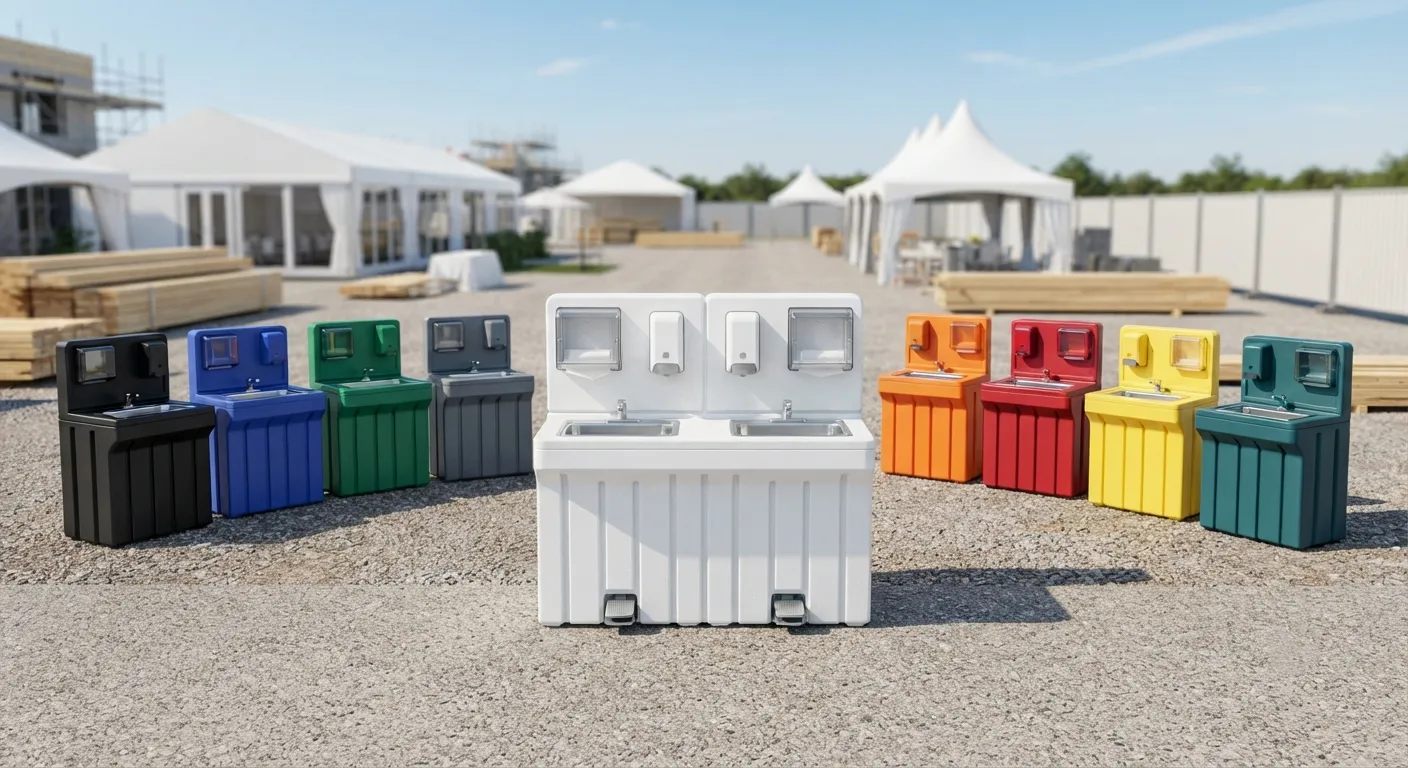
For general job site sanitation, yes, a handwashing setup belongs beside the toilet. Where workers apply paints, coatings or pesticides, OSHA 1926.51(f)(1) requires washing facilities, and 29 CFR 1910.141(d)(2) requires soap and towels, not just sanitizer. See handwashing station rental for options.
Will a porta potty tip over in wind or on a slope?
It can, if the ground isn't level and firm. A standard unit is about 44 by 48 inches on the ground and stands 92 inches tall, so it catches wind like a sail. Choose flat ground and consider a deluxe flushable porta potty base, which sits heavier.
How close can a porta potty be to a dumpster or storage container?
Close is fine as long as service trucks can still reach both independently. Keep a separate approach lane for each, and check dumpster sizes and dimensions or storage container rental specs before finalizing a tight site layout.

Next step
Get a delivery date
Tell us the address, the dates and the headcount. We size the order and confirm the route.