
How many restrooms does a farm crew need?
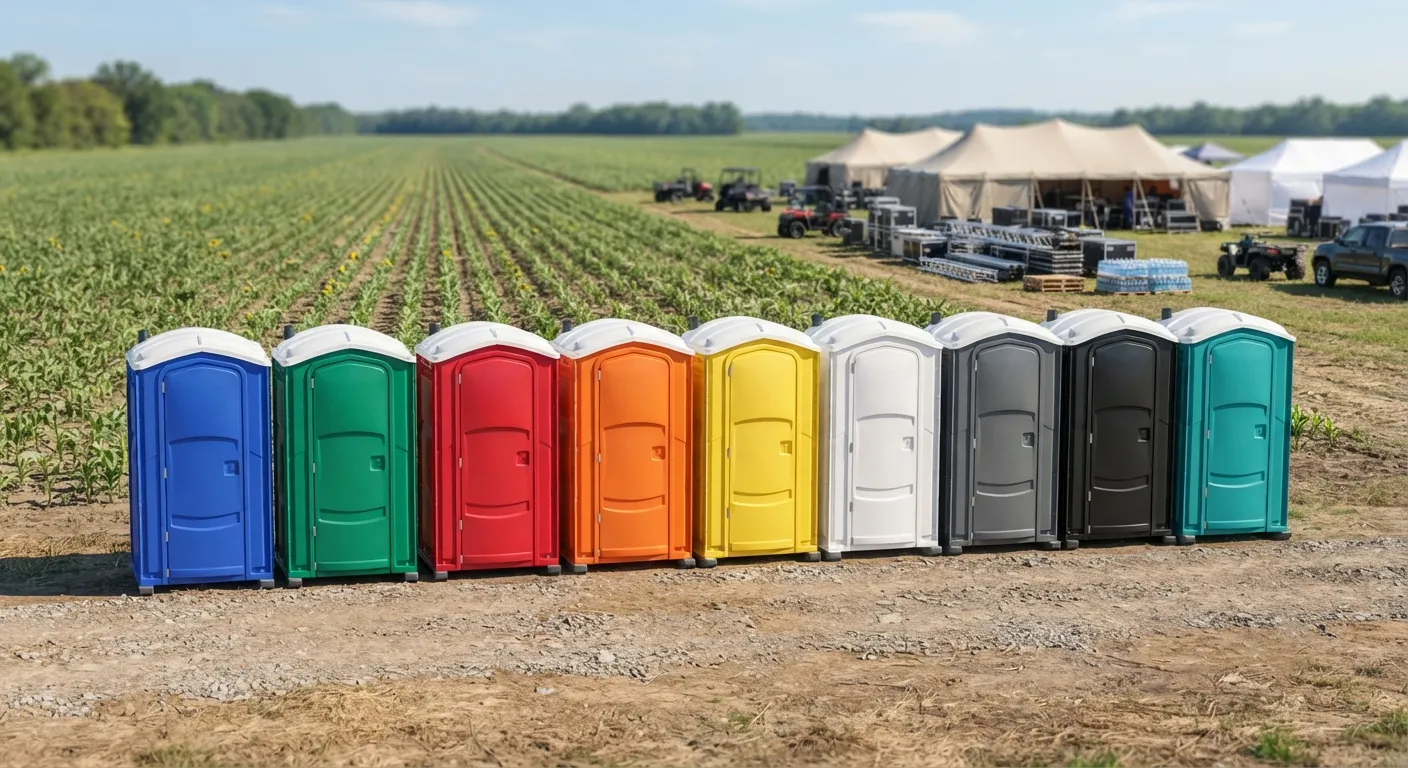
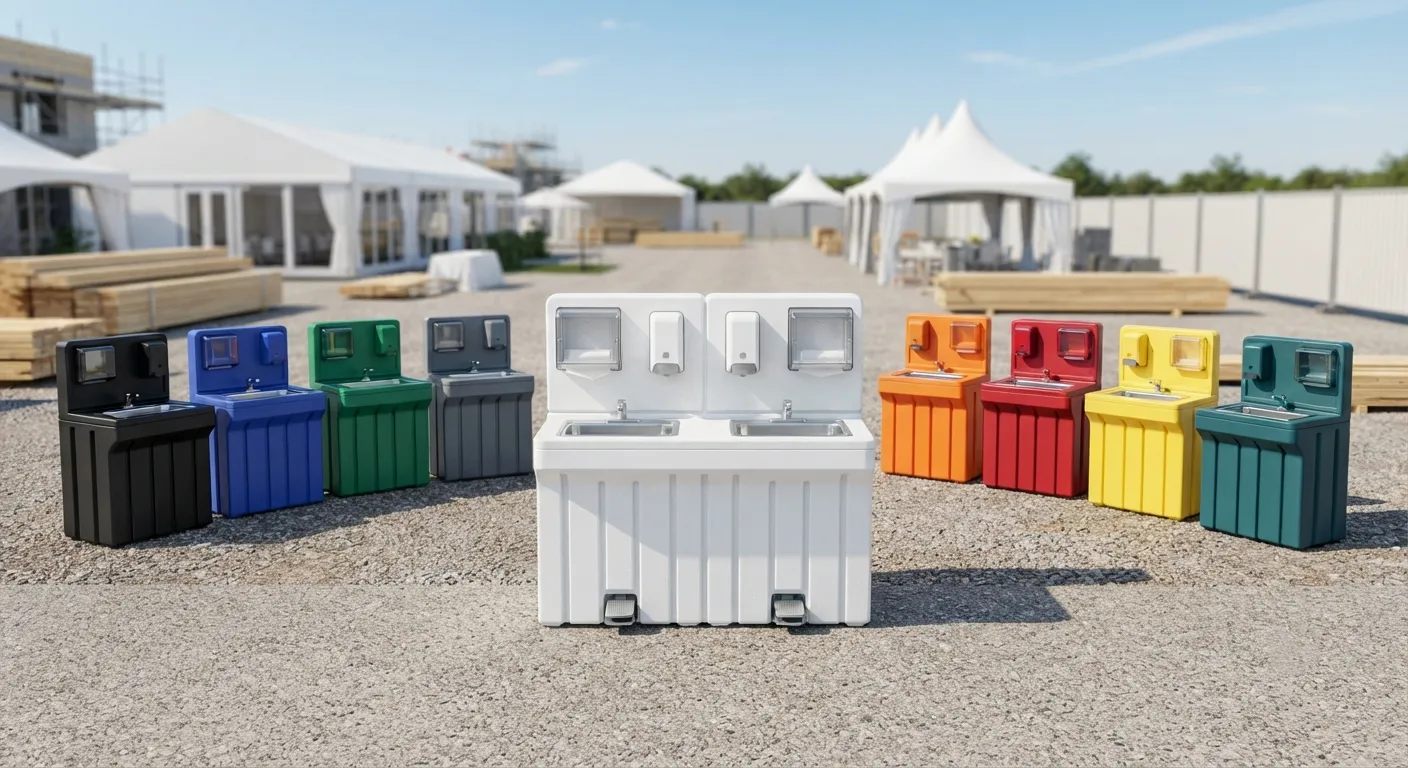
OSHA 1928.110 sets the baseline for hand-labor agricultural work: one toilet and handwashing facility per 20 employees, and workers cannot be more than a quarter mile from it. That is stricter than it sounds once your crew spreads across a few hundred acres of row crop or pasture near Shreveport. A single unit parked at the barn does not satisfy the rule if pickers are working a field a half mile out. You need units staged at intervals, which is why most farm accounts around Shreveport run two or three standard porta potty rentals rather than one big cluster. Figure the walk distance first, then the headcount. If you are unsure how many stops that adds up to, our guide on how many porta potties you need walks through the math side by side with the OSHA table at OSHA portable toilet requirements. Water matters too. OSHA 1926.51(a)(1) requires an adequate supply of potable water at the site, separate from the toilet requirement, so a handwashing station rental or a portable sink rental usually rides along with the toilets. Fixed farms with buildings on-site sometimes fall under general industry rules instead of 1928.110, and that changes the ratio to the 1910.141(c)(1)(i) table, so tell us how your labor is structured when you call.
Where do units go on a working farm?
Placement on a farm is different from a job site because the ground moves under you: mud, ruts, irrigation lines, and gates that need to stay clear for equipment. A standard unit sits about 44 by 48 inches on the ground and stands roughly 92 inches tall, small enough to tuck against a fence line or a field road without blocking a tractor pass. Delivery trucks still need about 60 feet of straight clearance to set a unit or a roll-off dumpster, so plan the drop point before harvest traffic picks up. Gravel pads or packed shoulder ground hold up better than soft dirt once a few weeks of service trucks start rolling in and out. If your operation is closer to Greenwood, 11.0 miles west of Shreveport, or out toward Frierson, 22.6 miles south, tell us the road surface when you book so we route the right truck. Farms running seasonal labor camps often add temporary fencing around the restroom cluster to keep units away from livestock and equipment lanes, and a few add a light tower for early morning or after-dark shifts during harvest. For crews doing any spraying work, herbicide or insecticide application triggers OSHA 1926.51(f)(1) washing facilities, which is a separate requirement from the general toilet and handwashing setup and needs its own station near the mixing and loading area.
Do farms need septic or holding tank service too?
Yes, and it is often the piece people forget until the barn bathroom backs up during the busiest week of the season. A residential-scale septic tank is typically pumped every 3 to 5 years depending on tank size and household or bunkhouse use, and farms with a fixed structure on-site should track that interval the same way a homeowner would. Our septic pumping service and septic tank cleaning pages cover the mechanics, and how often to pump a septic tank breaks down what drives that 3 to 5 year window. If you run a farm kitchen, roadside stand, or process anything with fats and oils on-site, a grease interceptor is pumped once fats, oils, grease and solids reach 25 percent of the liquid depth, not on a fixed calendar, so check it rather than guess; grease trap pumping has more detail. Seasonal labor housing without a fixed septic connection is a good fit for a holding tank rental instead, paired with the portable restrooms. Shreveport farms running equipment storage between seasons sometimes add a storage container rental or a mobile office trailer for the crew boss, which stages well next to the same delivery drop as the restrooms.
How much does a farm restroom rental cost?
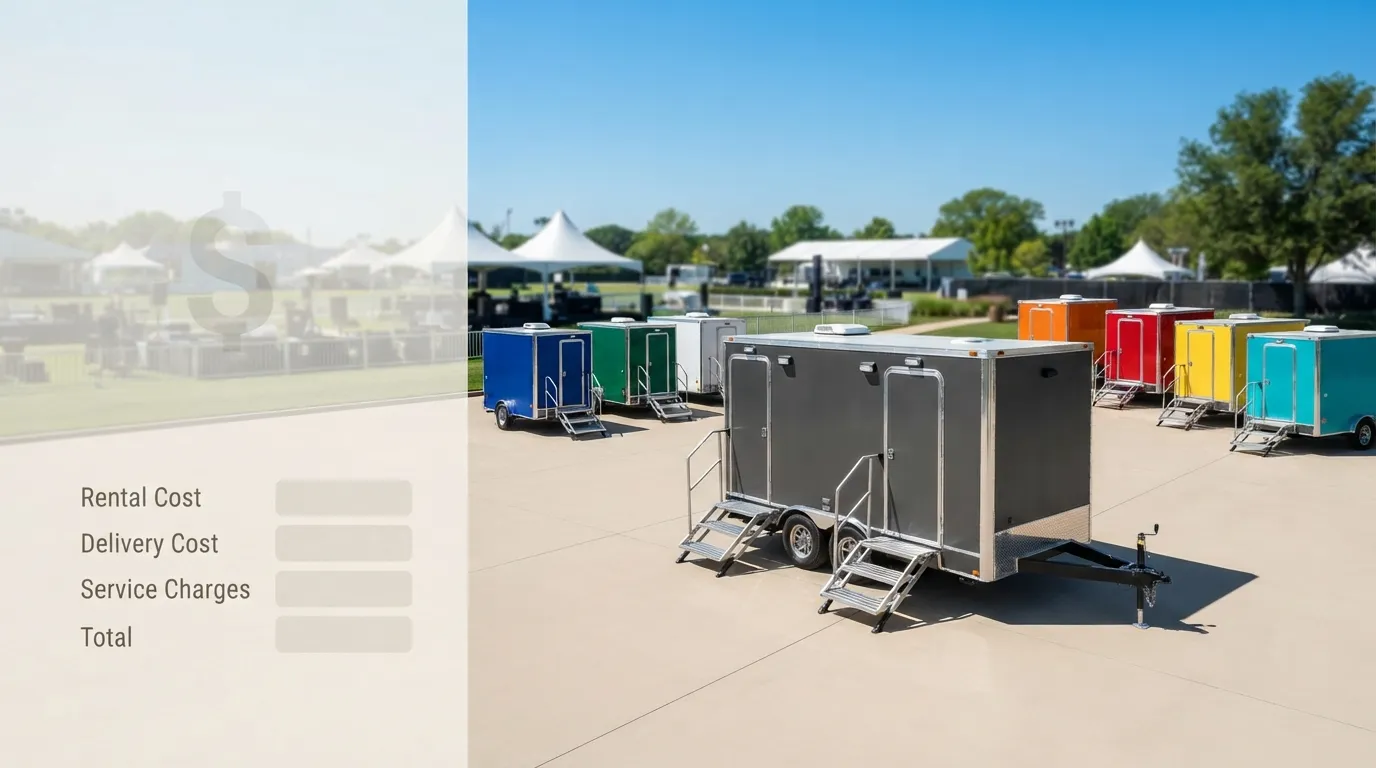
A standard unit runs $100 to $350 a day depending on service frequency, or $125 to $500 a month for season-long placement, which is the more common setup for farms. Multi-unit accounts get a delivery fee, typically $120 to $420 for a monthly placement. See monthly porta potty rental for the full breakdown.
Does a farm need an ADA-accessible unit?
If you have public-facing sales, a farm stand, or events like a corn maze, ADA Standards 213.2 requires at least 5 percent of clustered units be accessible, never fewer than one. Pure field labor crews without public access typically do not trigger this. Check ADA accessible porta potty for specs.
How often are farm restrooms serviced?
Weekly is the baseline under ANSI/PSAI Z4.3 for up to 10 users over a 40 hour week. Larger crews or hot months need twice-weekly service to keep tanks from filling early. See how often are porta potties cleaned.
Can I get emergency service if a unit fails during harvest?
Yes. Call and we route a truck the same day where possible. See emergency porta potty rental for how that works and what to expect on response time.
Do I need a permit for farm restrooms in Shreveport?
Permit rules depend on placement, especially near any public road frontage. Confirm placement in the right of way with the city before delivery. See porta potty permit requirements for what to ask.
Next step
Get a delivery date
Tell us the address, the dates and the headcount. We size the order and confirm the route.